
 EN
EN



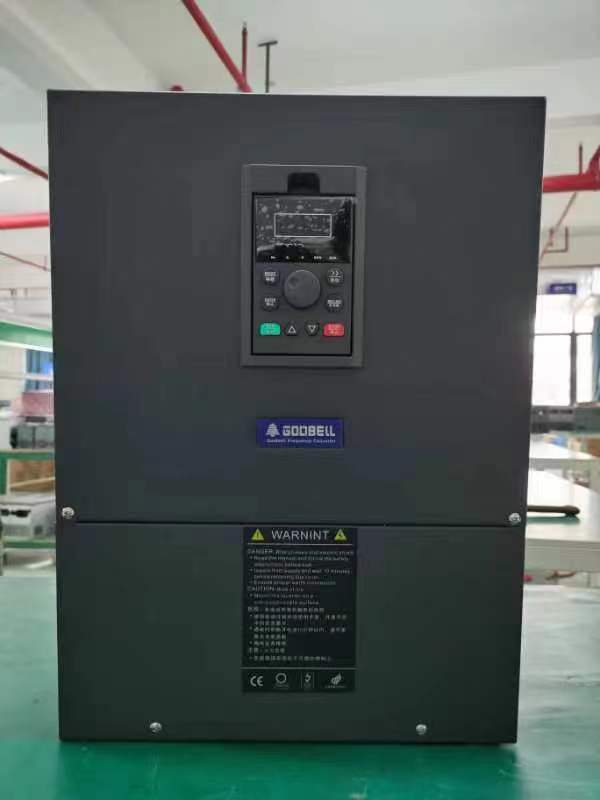
Core Energy Efficiency Principles for AC Drivers
How motor load profile and speed-torque characteristics dictate AC drivers energy consumption
The energy consumed by a motor-driven system is fundamentally shaped by its mechanical load profile—and how the AC driver modulates speed and torque to meet it. For variable-torque loads (e.g., centrifugal pumps, fans, blowers), torque scales with the square of speed and power with the cube—governed by the affinity laws. A 20% speed reduction therefore cuts power demand by nearly 50%. In contrast, constant-torque loads (e.g., conveyors, extruders, positive displacement pumps) require full torque across speed ranges, so power savings scale linearly with speed reduction. Constant-power loads (e.g., machine tool spindles, winding/unwinding systems) maintain steady power output while torque inversely adjusts with speed—offering minimal direct energy savings from speed control alone.
| Load Type | Torque vs. Speed | Power vs. Speed | Typical Applications | Energy Saving Potential with AC Drivers |
|---|---|---|---|---|
| Variable torque | T ∝ N² | P ∝ N³ | Centrifugal pumps, fans, blowers | Very high; even small speed reductions yield large savings |
| Constant torque | T = constant | P ∝ N | Conveyors, extruders, positive displacement pumps | Linear savings; proportional to speed reduction |
| Constant power | T ∝ 1/N | P = constant | Machine tool spindles, winding/unwinding | Minimal direct savings from speed changes; focus on process optimization |
By dynamically matching drive output to real-time load demand, facilities eliminate the energy waste inherent in throttling valves or mechanical dampers—turning the motor’s load profile into an active efficiency lever.
System-level optimization: Aligning AC drivers with mechanical load, power supply, and control architecture
Peak efficiency emerges only when the AC driver operates as one integrated element within a broader electromechanical system. Correct drive sizing relative to the motor and mechanical load is foundational: oversized motors operating at light loads incur significant inefficiencies that no drive can fully offset. Mechanical transmission components—including belts, gears, and couplings—must be properly selected and maintained to minimize friction and misalignment losses. Power quality also plays a decisive role: voltage imbalances and harmonic distortion increase motor core and copper losses, degrading overall system efficiency. Line reactors or passive filters mitigate harmonics, while power factor correction at the point of common coupling avoids utility penalties and reduces distribution losses. On the control side, selecting the right architecture—V/f, sensorless vector, or closed-loop vector—is critical. V/f control meets basic needs for stable fan and pump applications, whereas vector control delivers superior torque response and partial-load efficiency for dynamic tasks. Regenerative drives recover braking energy in cyclic applications (e.g., elevators, cranes), further improving net energy use. Modern drives also feed real-time operational data into higher-level control systems, enabling adaptive scheduling that aligns energy draw with production demand. True efficiency gains come not from the drive in isolation—but from treating the drive, motor, mechanical load, and electrical infrastructure as a unified, optimized system.
Advanced Control Strategies That Enhance AC Drivers Efficiency
V/F, vector, and DTC control: Efficiency trade-offs across partial-load and dynamic operation
Control method selection directly determines how efficiently an AC driver manages energy—particularly under partial-load or rapidly changing conditions. Constant volts-per-hertz (V/f) control is simple and cost-effective for steady-speed applications like HVAC fans or water pumps. However, because it cannot decouple torque- and flux-producing currents, it often over-excites the motor at light loads—increasing magnetizing current and stator losses. Field-oriented control (FOC), or vector control, eliminates this limitation by independently regulating torque and flux. As a result, it maintains optimal rotor flux across the speed range, typically reducing motor losses by 15–25% compared to V/f below 50% rated speed. Direct torque control (DTC) takes responsiveness further: by estimating torque and flux directly from terminal voltages and currents—bypassing modulation—it achieves microsecond-level torque adjustments ideal for high-dynamic applications such as hoists, cranes, and extruders. Yet DTC’s ultrafast switching introduces higher current ripple and acoustic noise, and its efficiency edge over well-tuned vector control diminishes under steady-state operation. The optimal choice hinges on application context—not theoretical superiority. A pump running at near-full load 90% of the time gains little from upgrading beyond V/f, while a servo-like positioning system benefits significantly in both precision and energy use from vector or DTC. Matching control strategy to actual duty cycle and performance requirements is essential.
Optimized PWM techniques to minimize switching losses and harmonic distortion in AC drivers
Pulse-width modulation (PWM) enables precise AC output synthesis—but every switching event incurs conduction and switching losses while generating harmonics that stress insulation and heat windings. Advanced PWM strategies reduce these penalties without compromising control fidelity. Space-vector PWM (SVPWM) already improves DC bus utilization by ~15% over sinusoidal PWM. Discontinuous PWM (DPWM) schemes go further: by clamping one inverter leg to the DC rail for part of each fundamental cycle, DPWM can cut switching losses by 30–50% at high modulation indices—especially valuable in drives operating near rated voltage for extended periods. The trade-off is increased phase-current ripple, which may raise motor copper losses and torque pulsations. To balance competing demands, modern drives employ hybrid modulation—dynamically switching between continuous and discontinuous patterns based on load, speed, and thermal conditions. Switching frequency itself is another key tuning parameter: lower frequencies reduce semiconductor losses but worsen harmonic content, audible noise, and motor heating. Optimal selection depends on motor inductance, cable length, and application constraints. Some drives now implement adaptive carrier-frequency control, using real-time monitoring of motor temperature and harmonic spectra to automatically adjust switching frequency—ensuring compliance with IEC 60034-25 voltage stress limits while maximizing efficiency and reliability. These innovations collectively push inverter efficiency closer to the theoretical limits of the power semiconductors, extending service life and lowering total cost of ownership.
Power Electronics Innovations Driving AC Drivers Efficiency Gains
Silicon carbide (SiC) inverters: Lower conduction and switching losses in modern AC drivers
The shift from silicon-based IGBTs to silicon carbide (SiC) MOSFETs represents a foundational advancement in AC drive efficiency. SiC’s wider bandgap enables dramatically lower conduction resistance and near-zero reverse recovery losses—reducing both static and dynamic power dissipation. In a 15 kW drive application, Wolfspeed reported a 73% reduction in turn-off losses when substituting SiC MOSFETs for conventional silicon IGBTs. This translates directly into smaller, lighter thermal management systems—smaller heatsinks and lower-power cooling fans—which themselves consume less energy. Crucially, SiC devices support much higher switching frequencies without proportional efficiency penalties. This allows finer motor control resolution and improved dynamic response, particularly beneficial in variable-torque applications. Field data shows SiC-based drives deliver up to 5% higher system efficiency in pump and fan installations—gains that compound over time in high-duty-cycle environments.
Operational Practices That Sustain AC Drivers Efficiency Over Time
Maintaining long-term AC drive efficiency requires disciplined, proactive operational practices—not just initial specification. According to the U.S. Department of Energy, properly applied AC drives can improve system energy savings by 20–50%, while the International Energy Agency notes they can extend electric motor service life by up to 50% when paired with appropriate maintenance and control strategies.
To sustain these benefits, facilities should embed the following practices into routine operations:
- Regular inspections and cleaning: Dust buildup on heatsinks and cooling fans impedes thermal transfer, forcing drives to derate or operate inefficiently. Quarterly visual checks and gentle cleaning prevent gradual performance erosion.
- Firmware and parameter updates: Drive manufacturers regularly release firmware updates that include efficiency enhancements, improved thermal algorithms, and security patches. Recalibrating parameters—such as motor nameplate data and encoder offsets—prevents control drift that wastes energy.
- Predictive maintenance: Monitoring vibration signatures, thermal imaging, and current waveform anomalies enables early detection of bearing wear, insulation degradation, or imbalance—reducing unplanned downtime by up to 30%, per industry benchmark studies.
- Staff training: Technicians and operators trained in proper commissioning, parameter configuration, and fault interpretation avoid misapplication errors and respond effectively to early warning signs—preserving both efficiency and equipment longevity.
When institutionalized, these practices ensure AC drives continue delivering their full energy-saving potential year after year—maximizing return on investment and supporting long-term sustainability goals.
FAQ
- What is the main factor influencing energy consumption in AC drivers? The mechanical load profile and how the AC driver modulates speed and torque directly influence energy consumption.
- Can AC drivers save energy in all applications? Energy-saving potential depends on the type of load. Variable-torque loads offer significant savings, whereas constant-power loads may offer minimal direct savings from speed control.
- Why is system-level optimization important for AC driver efficiency? Optimizing the entire system—drive, motor, mechanical load, and electrical infrastructure—ensures peak efficiency and minimizes waste.
- How does silicon carbide improve AC drive efficiency? Silicon carbide (SiC) enables lower conduction and switching losses, supports higher switching frequencies, and improves dynamic response in AC drivers.
- What operational practices prolong AC driver efficiency? Regular inspections, firmware updates, predictive maintenance, and staff training ensure the sustained efficiency and longevity of AC drivers.