
 EN
EN



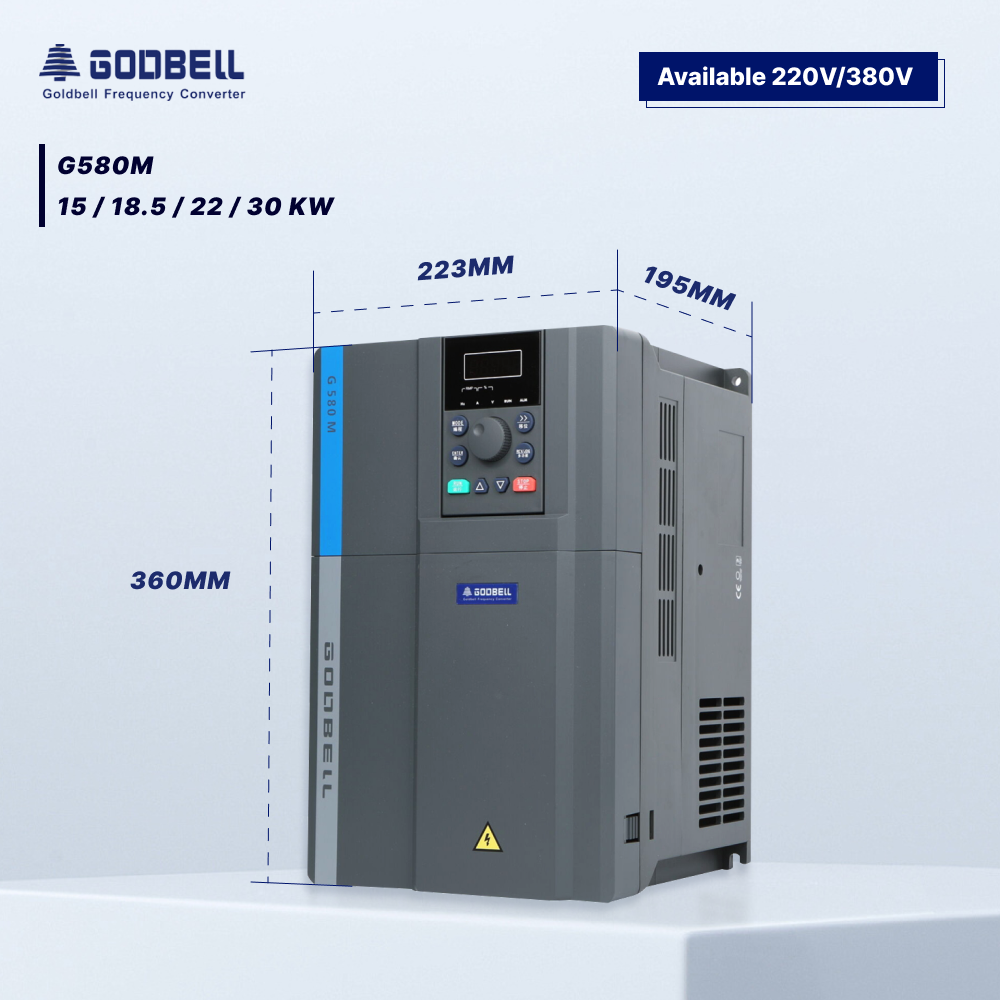
Understand Local Power Conditions and Select Matching variable frequency drivers
When I first worked on solar pump projects in rural Gujarat and Rajasthan, India, I quickly realized that the biggest challenge is not the pump itself, but matching variable frequency drivers to the unstable local power supply. India’s rural grid is often 415V three‑phase with large fluctuations, and many off‑grid sites rely fully on solar panels. Goldbell’s technical team, with nearly 20 years of experience in industrial inverters, has repeatedly emphasized that correct model selection can avoid more than 70% of field failures. Their variable frequency drivers support wide voltage input and strong resistance to voltage disturbances, making them highly suitable for Indian farm conditions.
In one cotton farm project, the client used an unadapted driver that kept tripping due to low voltage. After replacing it with a Goldbell G500 series variable frequency driver, the system ran stably for more than three years. Goldbell’s variable frequency drivers have CE certification, complete protection functions, and large stock for fast delivery, which is critical for India’s large‑scale solar pump promotion. Professional engineers also provide free model selection guidance, helping farmers and installers avoid mismatching problems.
When selecting variable frequency drivers for Indian solar pumps, you must consider solar panel voltage, pump power, and local grid standards. Goldbell’s products combine high‑efficiency MPPT and variable frequency speed regulation, maximizing water output while achieving almost zero electricity cost. This is not only energy‑saving but also reduces farmers’ long‑term expenses. Choosing the right variable frequency drivers is the foundation of a reliable solar irrigation system, and Goldbell’s professional solutions make this step simple and secure.
Basic Wiring and Safety Installation of variable frequency drivers
Correct wiring is essential for stable operation of variable frequency drivers in Indian solar pump projects. Based on on‑site experience, most faults come from loose connections, wrong phase sequence, or insufficient cable size. Goldbell’s variable frequency drivers have clear terminal labels and online engineer support, so even users with limited electrical experience can complete installation safely.
First, disconnect all power sources and use copper cables with proper thickness to reduce power loss. Connect the solar array or grid power to the input terminals of the variable frequency drivers, paying close attention to positive and negative poles. Goldbell’s drivers have over‑voltage, under‑voltage, overload, and short‑circuit protection, but correct wiring is still the first step to ensure safety.
Next, connect the pump motor to the output side. For three‑phase pumps, wrong phase sequence will reverse the pump and reduce water flow. After wiring, double‑check all connections and secure the terminal box. Goldbell’s variable frequency drivers use high‑quality components and sturdy design, adapting to high temperature and dusty rural environments in India. Proper wiring not only ensures safety but also helps variable frequency drivers maintain high efficiency in long‑term operation.
Key Parameter Settings for variable frequency drivers in Indian Solar Pumps
Setting parameters properly turns variable frequency drivers into an intelligent irrigation system. Many users simply power on and run, but fine‑tuning can improve water output by 15%–25%. Goldbell’s variable frequency drivers feature user‑friendly panels and intuitive operation, suitable for Indian farm users without professional training.
First, set basic parameters: start voltage, stop voltage, operating frequency, and protection values. The built‑in high‑efficiency MPPT function automatically tracks the maximum power point of solar panels, so no manual adjustment is needed. Soft start is another important advantage of Goldbell variable frequency drivers; it reduces inrush current, protects the motor and driver, and extends service life.
Then set speed regulation according to irrigation needs. Indian farms often have different water demands at different growth stages, and variable frequency drivers can flexibly adjust flow and pressure. During commissioning, run the system for 1–2 hours and check voltage, current, and water output. Goldbell’s technical team provides online support to quickly solve parameter errors, as we did in a Rajasthan project where a quick setting change fixed a fault code immediately.
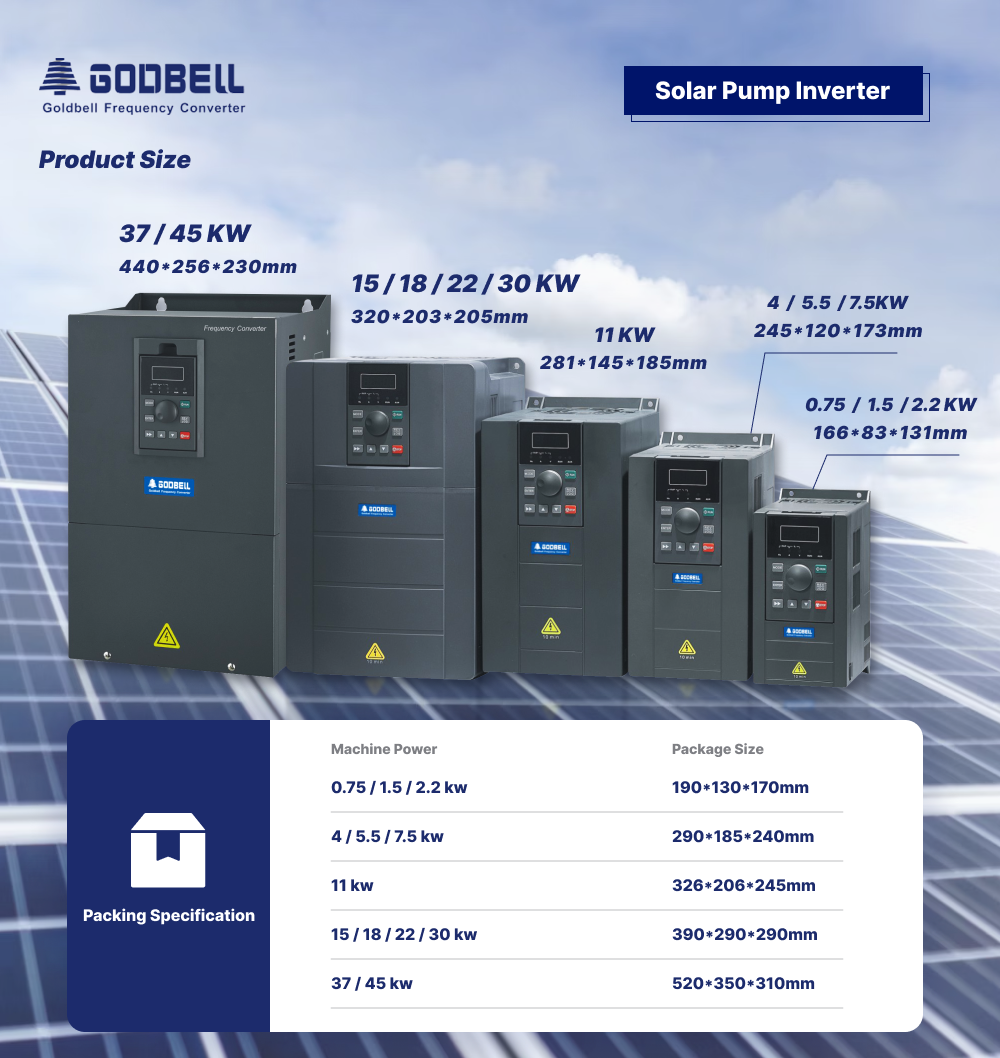
On‑site Experience: Solving Common Problems of variable frequency drivers in India
In hundreds of Indian solar pump sites, I have summarized the most common issues with variable frequency drivers and practical solutions. Goldbell’s stable design reduces failures, but knowing these tips makes maintenance much easier.
One frequent problem is that the pump does not start in weak sunlight. Usually, the start voltage is set too high; lowering it slightly solves the issue. Another common issue is low water output, often caused by wrong frequency or blocked pipes. Goldbell’s variable frequency drivers display real‑time data, helping quickly locate whether the problem is solar, driver, or pump related.
Overload or overheating faults often come from power mismatch or poor ventilation. Goldbell provides a full range of variable frequency drivers with sufficient stock, so you can easily get the right power model. Regular cleaning of solar panels and checking cables also keep the system stable. These simple steps, combined with reliable Goldbell drivers, ensure long‑term trouble‑free operation.
Long‑term Operation and Maintenance of variable frequency drivers in India
To maximize the life of variable frequency drivers in Indian solar pump projects, proper maintenance is essential. A well‑maintained driver can last 10 years or more. Goldbell focuses on stable quality and long‑term partnership, so their variable frequency drivers are designed for low maintenance and high durability.
Monthly inspections include checking indicator lights, buttons, and cooling vents. In dusty rural areas, cleaning every 2–3 months prevents overheating. Goldbell’s industrial‑grade design performs well in harsh environments, but basic care extends life further.
Check solar panels and cables every few months. Dirty panels reduce power, and loose cables cause voltage drops, affecting variable frequency drivers. Goldbell serves more than 60 countries, with professional support available across India. Keeping operation logs helps predict maintenance and avoid downtime.
By choosing Goldbell variable frequency drivers and following correct configuration, wiring, setting, and maintenance, your Indian solar pump project will achieve stable, efficient, and low‑cost irrigation for many years.
Table of Contents
- Understand Local Power Conditions and Select Matching variable frequency drivers
- Basic Wiring and Safety Installation of variable frequency drivers
- Key Parameter Settings for variable frequency drivers in Indian Solar Pumps
- On‑site Experience: Solving Common Problems of variable frequency drivers in India
- Long‑term Operation and Maintenance of variable frequency drivers in India