
 EN
EN



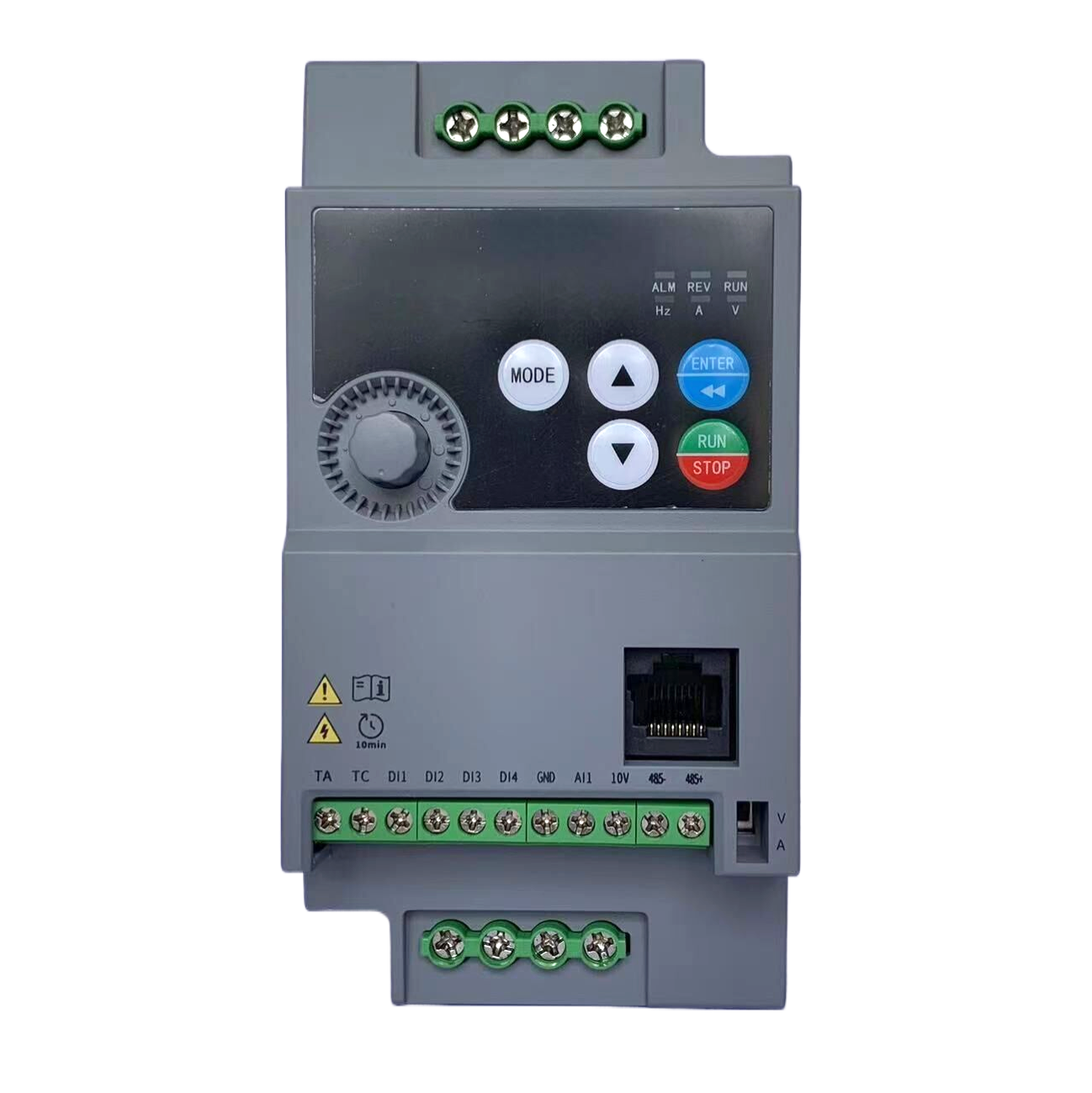
Why AC Drivers Are Essential for Precision Factory Automation
Industry 4.0 Demand: How AC drivers enable adaptive speed, torque, and positioning control
Modern factories operate under the relentless pressure of Industry 4.0—where production lines must adapt in real time to shifting product specifications and demand signals. AC drivers are the linchpin of this agility, replacing fixed-speed motor starters with intelligent, sensor-driven control that dynamically adjusts speed, torque, and positioning. For example, a robotic pick-and-place cell can accelerate smoothly during retrieval, then decelerate with high torque for micron-level placement—all orchestrated by the drive’s parameter set. This adaptive capability eliminates mechanical variators and reduces wear on belts, gears, and couplings. In packaging lines, drive-controlled conveyors synchronize instantly with upstream fillers, preventing jams and product loss. The result is a production system capable of switching between product variants in minutes—not hours—directly supporting mass customization and just-in-time manufacturing. As connectivity standards mature, AC drivers serve as the critical bridge between physical motion and cloud-based analytics, enabling closed-loop optimization across entire plants.
Core Functionality: Converting fixed-frequency input into variable-frequency, vector-controlled motor output
At the heart of every AC driver is a power-conversion stage that transforms the fixed-frequency, fixed-voltage AC supply from the grid into a precisely controlled output. This process begins with a rectifier converting AC to DC, followed by a DC link that smooths voltage fluctuations, and concludes with an inverter that synthesizes a variable-frequency, variable-voltage AC waveform. Basic scalar (V/f) drives maintain a constant voltage-to-frequency ratio to deliver adequate torque at low speeds—but high-performance applications demand vector control. Vector-controlled AC drivers mathematically decouple the motor’s torque- and flux-producing currents, enabling independent regulation of each. This allows full rated torque even at zero speed—critical for hoists, extruders, and precision positioning axes. The drive’s onboard processor executes these calculations at microsecond intervals, continuously adjusting the output waveform to match real-time load and rotor position. It is this shift—from open-loop, fixed-frequency operation to closed-loop, field-oriented control—that unlocks the sub-millisecond timing and sub-millimeter positioning accuracy required in modern automated production, where even minor deviations can scrap an entire batch.
Strategic Deployment of AC Drivers in Production Line Integration
Network Architecture: Transitioning from analog PLC control to distributed EtherCAT- or PROFINET-enabled AC driver systems
Traditional production lines often relied on analog 0–10 V or 4–20 mA signals from a central PLC to command AC drivers—a setup plagued by extensive point-to-point wiring, limited diagnostic visibility, and sluggish response times. The shift to real-time Ethernet protocols like EtherCAT and PROFINET transforms this architecture entirely. AC drivers equipped with these interfaces become intelligent, autonomous nodes on a high-speed network, processing data locally while synchronizing with sub-millisecond precision. EtherCAT supports cycle times as low as 31.25 µs, enabling precise multi-axis coordination for robotics and pick-and-place operations. PROFINET with IRT (Isochronous Real-Time) guarantees deterministic data exchange—essential for time-critical processes such as web tension control or synchronized packaging. This distributed approach reduces PLC overhead, simplifies cabling, and enables remote parameterization and firmware updates. According to a 2023 ARC Advisory Group study, manufacturers adopting fieldbus-enabled AC driver networks cut commissioning time by 40% and significantly increased configuration flexibility—enabling rapid line changeovers without hardware rework.
Selection Criteria: Matching AC drivers to I/O requirements, dynamic braking needs, and IP-rated durability for factory-floor conditions
Choosing the right AC driver demands a systematic evaluation of three interdependent factors: I/O capability, dynamic braking requirements, and environmental resilience. The table below outlines key decision criteria:
| Criteria | Typical Consideration | Example |
|---|---|---|
| I/O Count & Type | Number of digital inputs for limit switches, analog channels for pressure sensors, and relay outputs for brake control. | A packaging line may require 8 digital inputs, 2 analog inputs, and 2 relay outputs per driver. |
| Dynamic Braking | Regenerative energy from high-inertia loads must be dissipated via built-in or external braking resistors. | A conveyor with sudden stops can regenerate up to 15% of rated motor power; a 5 kW driver may need a 750 W resistor. |
| IP Rating | Dust and moisture protection class; IP54 for dry areas, IP65 for washdown zones. | Food-processing lines often mandate IP65-rated AC drivers to withstand high-pressure cleaning. |
Integrated safety functions—such as Safe Torque Off (STO)—further streamline compliance and reduce panel complexity. A 2022 International Society of Automation survey found that 68% of new installations now specify IP65-rated AC drivers with embedded STO, eliminating the need for external safety contactors and conserving valuable control-panel space. Matching these criteria to operational load dynamics and environmental conditions ensures long-term reliability, minimal downtime, and seamless integration into evolving automation architectures.
Quantifying ROI from AC Driver Deployment: Energy, Uptime, and Maintenance Gains
Energy Efficiency: Regenerative braking and VFD optimization cutting motor-related energy use by 25–40%
AC drivers with variable frequency drive (VFD) functionality match motor speed to real-time load demands—eliminating the energy waste inherent in fixed-speed operation. When paired with regenerative braking, energy normally lost as heat during deceleration is captured and returned to the supply, further reducing net consumption. Field data from diverse manufacturing sites consistently shows motor-related energy savings of 25–40%, with the highest gains observed in applications involving frequent starts, stops, or variable-speed operation—such as conveyors, mixers, and compressors. These efficiency gains directly lower electricity costs and often shorten the payback period for drive upgrades to under two years. Beyond kilowatt-hour reductions, optimized power factor and reduced inrush currents also decrease demand charges and extend the service life of upstream transformers, switchgear, and distribution infrastructure.
Operational Impact: 17% cycle time reduction (automotive OEM case) and 99.3% average uptime with predictive diagnostics
Precision torque and speed control from modern AC drivers translates directly into faster, more repeatable process cycles. In one automotive OEM’s body-welding line, upgrading to vector-controlled drives reduced cycle time by 17%—equivalent to adding over two hours of productive time per shift—without compromising weld quality or part tolerances. Meanwhile, built-in condition monitoring and predictive diagnostics continuously track parameters including motor current signature, winding temperature, and vibration trends. This early-warning capability prevents unplanned failures: a multi-plant study of lines using such diagnostics reported an average uptime of 99.3%. Combined, these throughput gains and exceptional reliability deliver strong ROI—reducing maintenance labor hours by up to 30%, lowering scrap rates through tighter process control, and increasing overall equipment effectiveness (OEE) by 8–12 percentage points.
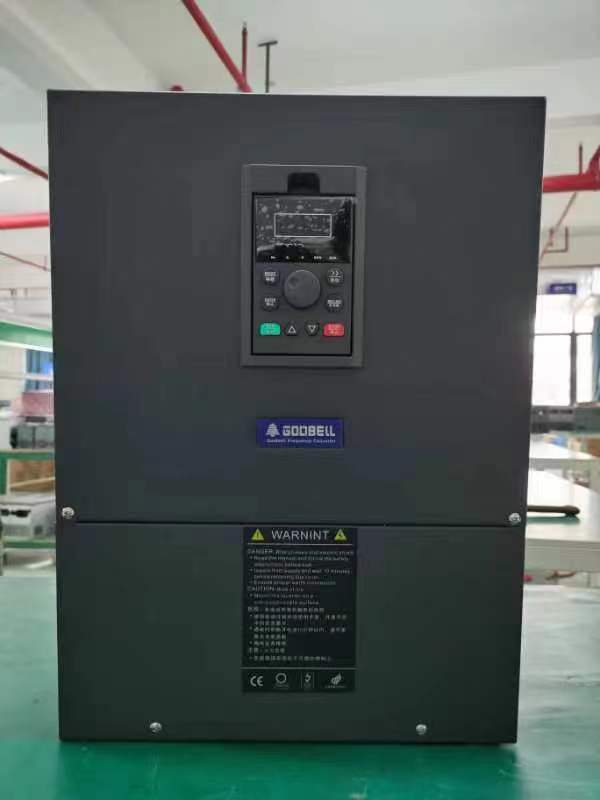
FAQ
What is an AC driver?
An AC driver is a device that regulates the speed, torque, and position of AC motors by converting fixed-frequency input from the power grid into variable-frequency, vector-controlled output.
How does AC driver vector control work?
Vector control mathematically decouples the torque- and flux-producing currents in a motor, enabling precise regulation of each and delivering full torque, even at zero-speed conditions.
Why are AC drivers important for Industry 4.0?
AC drivers support Industry 4.0 by providing adaptive control, enabling real-time adjustments to production lines, and bridging physical motion with cloud analytics for factory optimization.
What are common applications for AC drivers?
AC drivers are widely used in conveyors, robotic systems, mixers, extruders, compressors, and precision positioning axes in manufacturing and industrial settings.
How can AC drivers improve energy efficiency?
By matching motor speed to actual load demands and using regenerative braking to capture and reuse energy, AC drivers often reduce motor-related energy consumption by 25–40%.