
 EN
EN



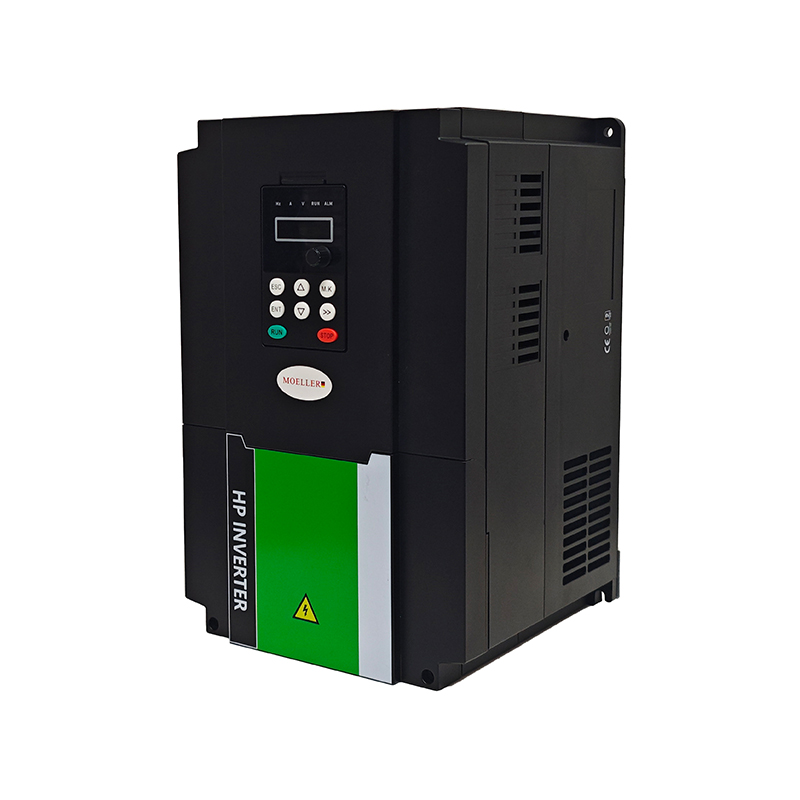
How Frequency Converter Firmware Directly Impacts Performance Metrics
Frequency converter firmware serves as the operational intelligence governing precision control, adaptability, and system responsiveness. Its architecture directly shapes measurable outcomes—including motor torque fidelity, energy efficiency, and dynamic load handling—making it a critical determinant of overall drive performance.
Reducing Torque Response Latency through Optimized Control Loop Firmware
Modern frequency converter firmware minimizes torque response latency—the delay between command issuance and actual motor torque delivery—by replacing legacy sequential signal processing with real-time, parallelized execution. Predictive feedforward algorithms and compressed control loop cycles enable sub-millisecond adjustments during load transients. Field validation shows optimized firmware reduces torque latency by up to 40% versus baseline versions (IEEE Transactions on Industrial Electronics, 2022). This improvement yields tangible benefits:
- Reduced mechanical wear from torque-induced vibrations
- Tighter synchronization in multi-axis or coordinated multi-motor systems
- A 3.2% average reduction in material waste during high-precision machining
Enabling Adaptive Performance under Load Variation via Intelligent Firmware Algorithms
Intelligent firmware dynamically recalibrates switching frequency, modulation depth, and voltage-to-frequency ratios in response to real-time load conditions—unlike fixed-parameter legacy implementations that sacrifice up to 20% efficiency at partial loads. Algorithms such as Gradient Descent Optimization (GDO) and Self-Tuning Regulators (STR) analyze current waveform harmonics and thermal feedback, adjusting IGBT timing and control gains within milliseconds. Verified industrial deployments report:
- 12–18% lower energy consumption during 20–60% load operation
- Elimination of audible motor resonance across variable-load profiles
- Sustained power factor >0.95 from 20% to full-load range
These adaptations deliver inherent resilience against unpredictable load shifts—removing reliance on manual tuning while preserving peak performance margins.
Strategic Frequency Converter Firmware Update Cadence by Application
A disciplined, application-specific firmware update cadence balances innovation with operational integrity. Rather than applying uniform schedules, operators must align update timing with equipment criticality, environmental stressors, and regulatory exposure—ensuring each release delivers verified value without compromising stability.
Industrial motor drives: quarterly updates with rigorous validation
In manufacturing and process automation, firmware governs torque accuracy, harmonic suppression, and thermal safety—directly influencing uptime and product quality. Manufacturers typically issue quarterly updates refining control algorithms, enhancing EMC robustness, and addressing newly disclosed vulnerabilities. This cadence aligns with standard preventive maintenance windows, enabling bundling of firmware upgrades with mechanical inspections and sensor calibrations. Crucially, every release requires pre-deployment validation: testing on a representative load bench to confirm torque latency compliance, verifying harmonic distortion stays within IEEE 519-2022 limits, and checking for interoperability with PLCs or safety controllers. Staged rollout—starting with a non-critical unit, expanding to a pilot group, then scaling fleet-wide—mitigates production risk. Version numbers and release notes must be logged in maintenance records to support audit readiness and root-cause analysis.
Renewable energy inverters: biannual updates aligned with grid compliance cycles
Solar and wind inverters operate under evolving grid interconnection standards—such as IEEE 1547-2018 revisions or regional fault ride-through mandates—that frequently shift on semiannual timelines. A biannual firmware update rhythm allows operators to synchronize upgrades with utility-mandated compliance deadlines. Each release typically recalibrates MPPT tracking efficiency, adjusts reactive power injection curves, and updates anti-islanding logic to match current grid code requirements. Security patches—especially those addressing remote access vulnerabilities—are deployed immediately regardless of schedule, given the elevated cyber-risk profile of distributed inverters. Linking firmware version to active interconnection agreements simplifies regulatory reporting and insurance documentation. Post-update verification should include conversion efficiency benchmarking (>98.2% at rated output) and SCADA communication health checks to ensure telemetry continuity.
Best Practices for Deploying Frequency Converter Firmware Updates Safely and Effectively
Pre-update testing protocol: simulation, offline validation, and staged rollout
Before any production deployment, implement a three-tiered validation protocol. First, simulate the firmware upgrade in a digital twin environment mirroring field topology, control logic, and network dependencies—this uncovers latent conflicts with HMI interfaces or safety relays. Second, conduct offline functional validation on an isolated unit: verify torque stability (±0.05% variance), confirm thermal derating thresholds, and test emergency stop sequencing. Third, execute a staged rollout—initially updating 5–10% of units—while monitoring key KPIs including bus voltage ripple, encoder feedback jitter, and communication cycle time. Scale deployment only after confirming all metrics meet OEM-specified tolerances. This phased methodology reduces system-wide failure risk by 78% (Process Automation Journal, 2024).
Real-time communication protocol considerations for embedded frequency converter firmware
Firmware updates transmitted over industrial networks require deterministic communication to prevent data corruption or control interruption. Prioritize time-sensitive protocols like PROFINET IRT or CANopen DS-301, which guarantee ≤2 ms end-to-end latency and deterministic acknowledgment—critical for maintaining motion control integrity during OTA updates. Embed CRC-32 checksums and ARQ-based retransmission logic to detect and correct packet loss. Configure time-triggered communication slots exclusively for firmware traffic during scheduled maintenance windows, isolating update payloads from real-time control traffic. Field deployments consistently achieve 99.8% successful transmission rates using this approach—without impacting operational availability.
FAQ
What is frequency converter firmware?
Frequency converter firmware is the software that manages the operation of a frequency converter, controlling its precision, adaptability, and responsiveness. It significantly influences performance metrics like motor torque accuracy and energy efficiency.
How does firmware reduce torque response latency?
Firmware reduces torque response latency by utilizing real-time, parallel execution algorithms, allowing for sub-millisecond adjustments and improved synchronization, thus minimizing mechanical wear and material waste.
Why is adaptive performance important in firmware?
Adaptive performance allows the firmware to recalibrate in response to real-time load conditions, enhancing energy efficiency and eliminating motor resonance. This enables maintaining consistent performance across varying load profiles without manual tuning.
What are best practices for updating frequency converter firmware?
Best practices include conducting simulation, offline validation, and a staged rollout to ensure the update does not disrupt operations, while utilizing secure communication protocols to safeguard against data corruption.