
 EN
EN



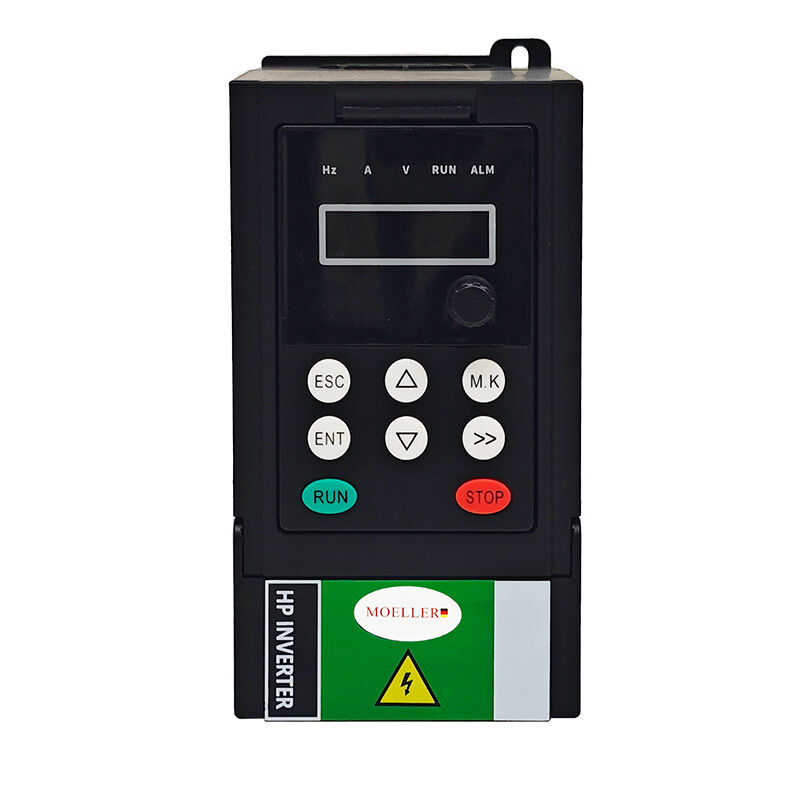
The Physics Behind Variable Frequency Energy Savings: Affinity Laws Explained
Cubic Power–Speed Relationship in Variable Torque Loads
The affinity laws describe how centrifugal pumps and fans respond to speed changes. For variable torque loads—such as those driven by centrifugal impellers—power consumption scales with the cube of motor speed. This means a 20% speed reduction cuts power draw to approximately 51% of full-load power, delivering nearly 49% energy savings. Flow varies linearly with speed; pressure varies with the square; but it's the cubic power relationship that dominates efficiency gains. This nonlinear response is why variable frequency drives (VFDs) deliver such dramatic savings on centrifugal equipment—small speed adjustments yield disproportionately large reductions in energy use.
Real-World Validation: Fan and Pump Energy Savings Calculations
Field measurements consistently confirm these theoretical savings. Halving fan speed reduces power consumption to just 12.5% of full-load levels—an 87.5% reduction. A more modest 10% speed reduction still delivers ~27% energy savings. These outcomes translate directly into lower operating costs for high-run-time applications like HVAC systems, water circulation pumps, and industrial exhaust fans. Because the affinity laws produce predictable, repeatable results, engineers can model VFD payback with high confidence before installation—enabling data-driven investment decisions.
Variable Frequency vs. Conventional Control: Quantifying Efficiency Gains
Energy Waste from Throttling, Dampers, and On/Off Cycling
Traditional control methods—throttling valves, inlet dampers, and on/off cycling—waste significant energy. Throttling restricts flow while the motor runs at full speed, converting excess energy into heat and pressure loss. On/off cycling subjects motors to repeated high-inrush currents and forces operation at peak power only to shut down shortly after—squandering energy at every start. Neither method modulates power to match actual load. As a result, systems relying solely on these approaches often achieve less than 31% total system efficiency, with most energy consumed unnecessarily.
How Variable Frequency Drives Enable Precision Load Matching
VFDs eliminate this mismatch by adjusting motor speed precisely to process demand—replacing wasteful throttling with intelligent, continuous control. Instead of running full-speed and dumping excess flow, the drive delivers only the power required. This shift lifts system efficiency from ~31% to over 72%, more than doubling effective energy utilization. The table below summarizes the operational advantages:
| Comparison Item | Conventional Control | Variable Frequency Drive Control |
|---|---|---|
| Speed Control | Fixed or stepped, rough adjustment | Stepless, precise regulation |
| Energy Use | High energy loss from full-speed operation | Demand-based power, 20–50% reduction |
| Start/Stop | High impact and inrush current | Smooth acceleration, reduced stress |
| Maintenance | Frequent wear from mechanical components | Minimal mechanical contact, longer service life |
| System Integration | Manual feedback control | PLC, sensors, and IIoT connectivity |
Industrial Application Prioritization: Where Variable Frequency Delivers Highest ROI
Compressors, Pumps, Fans, and Conveyors: Load Profile Analysis
VFD benefits vary significantly by load type. Centrifugal pumps and fans—classified as variable torque loads—deliver the strongest returns due to the cubic power–speed relationship. Here, a 20% speed reduction yields nearly 50% energy savings. In contrast, constant torque applications like conveyors and positive-displacement compressors follow a linear power–speed curve—offering smaller energy reductions but still gaining from improved process control, reduced mechanical stress, and extended equipment life. Prioritize VFD deployment where demand fluctuates significantly: HVAC supply fans in commercial buildings, booster pumps in municipal water systems, or cooling tower fans in manufacturing plants.
High-Run-Time Systems: Optimizing Payback Through Strategic Deployment
Annual operating hours are the strongest predictor of VFD payback. A pump running 6,000 hours per year at partial load typically recovers its VFD investment in 12–18 months. Conversely, equipment operating only 1,000 hours annually may require several years to break even. Therefore, focus first on high-usage assets with dynamic load profiles—main air compressors, chilled water pumps, and process-critical fans. Integrating VFDs with real-time load monitoring further enhances ROI by eliminating fixed-speed cycling and ensuring motor speed continuously aligns with actual demand—accelerating both financial return and progress toward energy efficiency goals.
FAQ
What are the affinity laws? The affinity laws describe how changes in speed affect flow, pressure, and power in centrifugal pumps and fans, with power scaling cubically with speed.
How do Variable Frequency Drives (VFDs) save energy? VFDs save energy by adjusting motor speed to match the exact process demand, avoiding wasteful full-speed operation, and significantly reducing energy consumption.
What are the benefits of using VFDs over traditional control methods? VFDs offer precise speed control, reduced energy use, smooth start/stop operations, less maintenance, and better system integration compared to throttling and on/off cycling.
Where should VFDs be prioritized for installation? VFDs should be prioritized in high-usage applications with fluctuating loads, like HVAC systems, water pumps, and manufacturing plant fans, where they offer the most significant return on investment.