
 EN
EN


Compare Core Solar Inverter Types by Application and System Architecture
Grid-Tied, Off-Grid, and Hybrid Solar Inverters: Matching Topology to Energy Goals
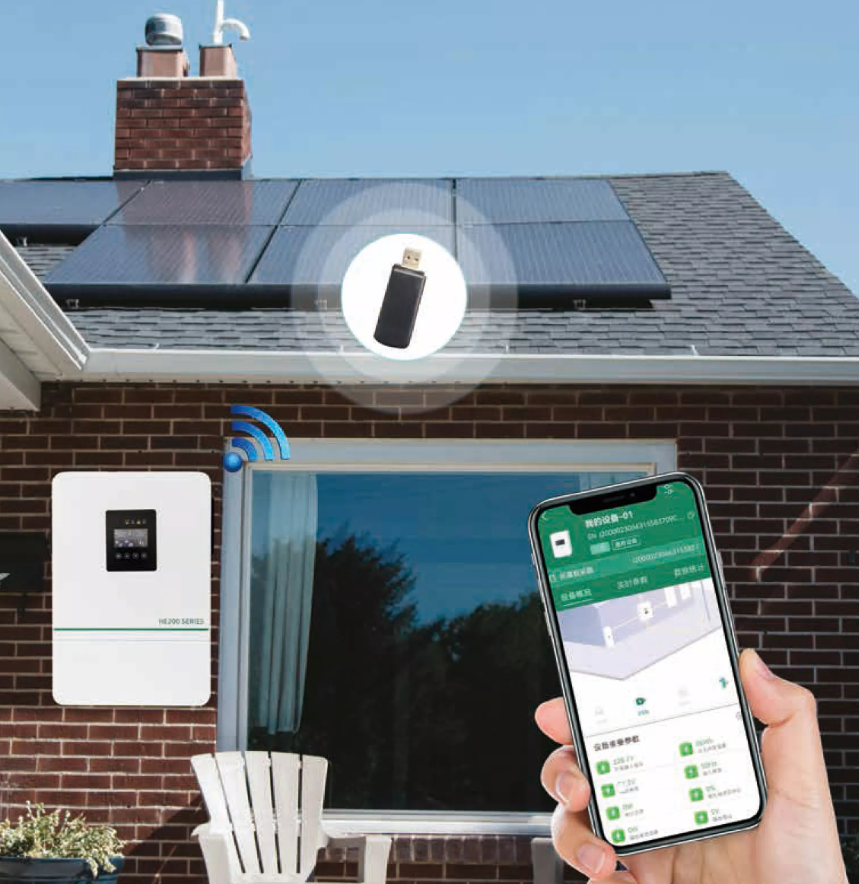
Selecting the right solar inverter starts with aligning its topology to your energy objectives. A grid-tied inverter synchronizes seamlessly with the utility grid—enabling you to export surplus solar generation and draw power when production is low. It’s the optimal choice for homeowners with net metering who prioritize bill reduction without battery backup. An off-grid inverter, by contrast, operates autonomously—converting DC from solar panels into usable AC while managing battery charging and discharge. It’s essential for remote locations or sites where grid access is unreliable or nonexistent. A hybrid inverter integrates both capabilities, coordinating solar generation, battery storage, and grid interaction in a single unit. This makes it ideal for users seeking outage resilience and grid participation—such as exporting excess energy while retaining backup power.
| Topology | Best For |
|---|---|
| Grid-tied | Simple grid-connected systems without batteries |
| Off-grid | Remote sites or full energy independence |
| Hybrid | Backup power plus grid interaction |
Microinverters, String Inverters, and Power Optimizers: Shading Resilience and Installation Flexibility
Beyond system architecture, physical inverter design directly impacts real-world performance—especially under suboptimal conditions. String inverters connect multiple panels in series to a single central unit. They offer strong value for uniform, unshaded roofs but suffer significant output loss if even one panel is shaded or underperforming—a limitation known as “string-level drag.” Microinverters, mounted behind each panel, convert DC to AC at the module level. This architecture eliminates string-level losses, delivering superior shading resilience and flexibility for complex roof layouts with mixed orientations or tilt angles. Power optimizers sit at each panel to condition DC output before sending it to a centralized string inverter—providing panel-level optimization without replacing the inverter itself. While they fall short of microinverters in shade tolerance, they retain the simplicity and serviceability of a single inverter. Choose string inverters for straightforward installations; select microinverters or optimizers when shading, orientation variation, or roof complexity demands granular control.
Size and Specify Key Solar Inverter Parameters for Optimal Performance
DC Input Capacity, AC Output Rating, and DC-to-AC Ratio (1.1–1.3) for Yield and Safety
Sizing an inverter correctly hinges on three interdependent parameters: DC input capacity, AC output rating, and the DC-to-AC ratio—typically recommended between 1.1 and 1.3. The DC input capacity must accommodate the total nameplate wattage of your solar array, while the AC output rating reflects the inverter’s maximum continuous power delivery. The DC-to-AC ratio represents intentional panel oversizing relative to inverter capacity—a deliberate design strategy to maximize annual energy yield. A ratio of 1.1 minimizes clipping during peak sun hours, protecting long-term inverter reliability. A ratio near 1.3 captures more energy during shoulder hours (early morning, late afternoon, or cloudy periods), keeping the inverter operating closer to its efficiency sweet spot more often. Oversizing too aggressively risks sustained clipping and thermal stress; undersizing sacrifices yield and ROI. Striking this balance ensures safe, efficient, and financially sound system performance over time.
Peak Efficiency, MPPT Configuration, and Real-Time Monitoring for O&M and ROI Assurance
While peak efficiency ratings—often exceeding 97% in modern inverters—indicate best-case conversion, real-world weighted efficiency better reflects daily energy harvest across varying irradiance and temperature conditions. Equally important is MPPT configuration: inverters with dual or multi-channel MPPT can track and optimize power independently across separate arrays—critical for roofs with multiple azimuths or shading zones. This prevents mismatch losses and sustains higher overall output. Complementing hardware capability, built-in real-time monitoring delivers actionable operational intelligence—tracking voltage, current, energy flow, and fault codes continuously. Early anomaly detection enables proactive maintenance, reduces downtime, and extends service life. Together, high weighted efficiency, intelligent MPPT architecture, and robust monitoring form the technical foundation for both performance assurance and long-term ROI—ensuring your inverter remains a reliable, data-informed asset throughout its lifespan.
Validate Compatibility, Compliance, and Future-Proofing for Long-Term Solar Inverter Reliability
Battery Integration Support and Grid Compliance (UL 1741 SA, IEEE 1547-2018)
Future-proofing begins with verifying compatibility for battery integration—particularly voltage alignment and communication protocol support (e.g., CAN bus, Modbus, or proprietary APIs). Mismatched DC voltage ranges between inverter and battery can cause efficiency losses exceeding 15% during peak loads and may trigger safety shutdowns. For grid-connected systems, compliance with UL 1741 SA and IEEE 1547-2018 is non-negotiable. UL 1741 SA certifies anti-islanding protection and advanced grid-support functions—including reactive power control during disturbances. IEEE 1547-2018 mandates dynamic response capabilities like voltage and frequency ride-through, ensuring inverters remain online during grid fluctuations rather than disconnecting en masse. Non-compliant systems risk interconnection denial or costly retrofits; the Ponemon Institute (2023) reports average penalties of $740,000 per facility for failure to meet these standards.
Scalability Across Residential and Commercial Installations: Layout Adaptability and Warranty Coverage
Design flexibility matters across project scales. Residential applications typically require compact, single-phase 120/240V inverters that fit within constrained mechanical spaces and integrate cleanly with existing electrical panels. Commercial projects demand expandable, three-phase solutions capable of scaling from tens to hundreds of kilowatts—ideally through modular stacking or parallel operation without hardware replacement. Centralized monitoring interfaces and unified firmware updates further simplify fleet-wide management. Warranty coverage reflects expected duty cycles: residential units commonly include 10-year limited warranties, while commercial-grade models offer 20–25 years—often extendable to cover both parts and labor. Look beyond warranty duration: NREL’s 2024 field study shows top-tier inverters maintain ≥92% of rated output at year 15, compared to the industry minimum guarantee of ≥85%. That durability differential directly impacts lifetime energy yield and total cost of ownership.
Frequently Asked Questions (FAQs)
What are the differences between grid-tied, off-grid, and hybrid inverters?
Grid-tied inverters work with utility grids to enable power export and bill reduction but lack battery storage. Off-grid inverters operate independently, powering remote locations with batteries. Hybrid inverters combine both features, providing backup power along with grid interaction.
How do microinverters differ from string inverters and power optimizers?
Microinverters convert DC to AC at the panel level, offering superior shading resilience for complex layouts. String inverters connect panels in series to a central unit but suffer shading losses. Power optimizers improve performance by conditioning DC for string inverters but don’t eliminate shading issues as effectively as microinverters.
What is the ideal DC-to-AC ratio for a solar inverter?
The recommended DC-to-AC ratio ranges between 1.1 to 1.3. A ratio of 1.1 minimizes clipping, while a ratio of 1.3 increases annual energy yield during less optimal sun conditions.
Why is grid compliance critical for solar inverters?
Grid compliance ensures safe and reliable operation during disturbances. Standards like UL 1741 SA and IEEE 1547-2018 prevent disconnection during fluctuations and certify advanced grid-support capabilities.
How do warranties vary between residential and commercial solar inverters?
Residential inverters often provide 10-year warranties, while commercial models include 20–25 years. Top-tier inverters maintain high output efficiency over time, directly impacting energy yield and total cost of ownership.
Table of Contents
- Compare Core Solar Inverter Types by Application and System Architecture
- Size and Specify Key Solar Inverter Parameters for Optimal Performance
- Validate Compatibility, Compliance, and Future-Proofing for Long-Term Solar Inverter Reliability
-
Frequently Asked Questions (FAQs)
- What are the differences between grid-tied, off-grid, and hybrid inverters?
- How do microinverters differ from string inverters and power optimizers?
- What is the ideal DC-to-AC ratio for a solar inverter?
- Why is grid compliance critical for solar inverters?
- How do warranties vary between residential and commercial solar inverters?