
 EN
EN



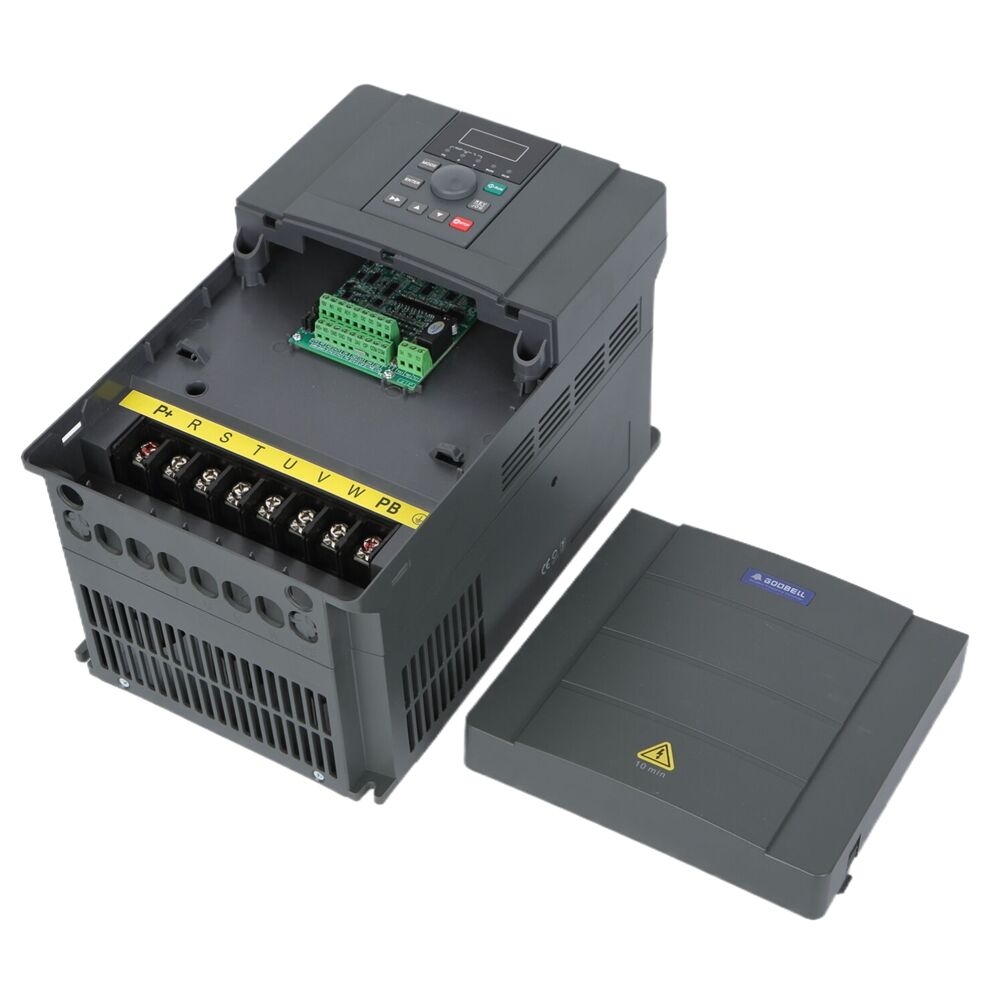
Pre-Installation Planning: Site Assessment and VFD Variable Frequency Drive Sizing
Evaluating load profiles, motor specs, and production line duty cycles
A thorough site assessment starts with documenting each motor’s nameplate data—rated voltage, full-load current (FLA), service factor, and insulation class—and measuring its actual load profile over a full production duty cycle using a power analyzer. This reveals peak demand, idle periods, torque behavior, and operational variability. Constant-torque loads (e.g., conveyors, extruders) require different drive characteristics than variable-torque loads (e.g., pumps, fans), and misclassifying them risks oversizing or undersizing the VFD—both of which increase energy use and reduce system reliability. Crucially, confirm the motor is inverter-duty rated; standard motors lack winding insulation capable of withstanding high-frequency voltage spikes generated by modern VFDs, risking premature failure.
Selecting the right VFD variable frequency drive capacity and inverter-duty motor compatibility
Size the VFD based on the motor’s full-load amps (FLA), not horsepower. Use the following guideline for output current rating:
| Load Type | Recommended VFD Current Rating |
|---|---|
| Constant torque | 110–120 % of motor FLA |
| Variable torque | 100–110 % of motor FLA |
| High starting torque | 130–150 % of motor FLA |
Also verify that the drive’s output frequency range supports your process requirements and that its overload capacity accommodates worst-case surge conditions—such as conveyor startup or pump priming. For inverter-duty motors, ensure winding insulation complies with NEMA MG-1 Part 31 to withstand reflected wave voltage peaks, especially in cable runs exceeding 15 meters. A correctly sized VFD improves efficiency, reduces harmonic distortion, and extends both drive and motor service life.
Electrical Installation: Safe Wiring, Grounding, and Harmonic Mitigation for VFD Variable Frequency Drive
EMI suppression and proper grounding techniques to protect control systems
VFDs generate electromagnetic interference (EMI) that can disrupt PLCs, sensors, and communication networks. To suppress EMI, use shielded motor cables and bond the shield to the VFD’s metal chassis at both ends—creating a low-impedance path to ground. Mount the drive on a conductive metal panel bonded to the facility’s equipotential grounding system. Run short, low-impedance grounding conductors directly from the VFD to the main ground bus, and maintain at least 30 cm (12 inches) separation between power cables and control/signal wiring to minimize cross-talk and induced noise. Star-ground configurations or dedicated ground rods further isolate sensitive equipment. Periodically verify ground impedance with a clamp-on meter; values below 1 ohm meet common industrial best practices for stable, noise-resistant operation.
Cable selection, length limits, and protection devices for harmonic reduction
Use shielded, three-conductor cables rated for the VFD’s output voltage and current. Unshielded cables should be limited to 50 meters; longer runs require shielded cables, ferrite cores, or output reactors to suppress voltage reflections and standing waves. On the input side, install a line reactor (3–5% impedance) to reduce current distortion and protect upstream transformers and breakers. Where stricter compliance is required—such as meeting IEEE 519 THD limits—add passive or active harmonic filters. Protection devices must include non-magnetic circuit breakers, fast-acting fuses, and surge protective devices (SPDs) rated for Category C or D environments. Avoid placing contactors or disconnect switches between the VFD and motor unless explicitly approved by the manufacturer, as switching under load can generate destructive voltage transients.
Physical Integration: Mounting, Thermal Management, and Environmental Considerations for VFD Variable Frequency Drive
Optimal mounting orientation, enclosure rating (NEMA/IP), and vibration isolation
Mount the VFD vertically with unobstructed clearance around heatsinks to support natural convection cooling. Horizontal mounting or inadequate airflow accelerates thermal stress and shortens component life. Select an enclosure rating appropriate for the environment: IP54 or higher for dusty or washdown areas; NEMA 12 for oil-laden or particulate-heavy zones; and NEMA 4X where corrosion resistance is needed. In high-vibration areas—near stamping presses or large rotating equipment—use elastomeric vibration isolators to prevent mechanical fatigue, loose terminals, or solder joint fractures.
Cooling strategies for high-ambient factory environments and derating guidelines
In ambient temperatures above the drive’s rated limit (typically 40°C), proactive thermal management is essential. Forced ventilation with filtered intake air or cabinet air conditioning maintains safe internal temperatures. When ambient heat cannot be controlled, apply derating per the manufacturer’s specifications—commonly 1–2% current reduction per degree Celsius above rating—to prevent overheating faults and insulation degradation. Since semiconductor lifespan halves with every 10°C rise in junction temperature, thermal planning during installation directly determines long-term reliability and total cost of ownership.
Commissioning and Operational Optimization of VFD Variable Frequency Drive on Production Lines
Parameter setup, auto-tuning, and safety interlock integration
Commissioning begins with accurate parameter entry: motor nameplate data, acceleration/deceleration ramps matched to mechanical load inertia, and control mode selection (V/f, sensorless vector, or closed-loop). Perform auto-tuning—either static (motor stationary) or rotating—to characterize motor resistance and inductance, enabling precise torque response and stable low-speed operation. Integrate safety interlocks via discrete inputs (e.g., e-stop, guard door switches) configured to initiate immediate output disable and safe stop per ISO 13849 or IEC 61800-5-2. Always back up configuration files to ensure consistent replication across identical drives on multi-motor lines.
Real-world benefits: Energy savings, soft-start reliability, and precision process control
A properly commissioned VFD delivers measurable ROI through three key advantages: First, energy savings—by matching motor speed to real-time demand instead of throttling flow or using mechanical brakes, users commonly achieve 20–50% reductions in pump and fan energy use. Second, soft-start eliminates damaging inrush current, reducing mechanical shock on belts, couplings, and gearboxes—cutting unplanned maintenance by up to 40%. Third, precision speed control enhances product consistency in applications like web handling, batching, and filling—reducing scrap, improving throughput, and supporting Industry 4.0 data collection for predictive analytics.
FAQs
1. What is the purpose of a site assessment before VFD installation?
A site assessment identifies the motor specifications, load requirements, and operational characteristics needed to properly size and configure a VFD.
2. Why is motor insulation critical for VFD compatibility?
Inverter-duty motors have enhanced insulation to handle high-frequency spikes from VFDs, reducing the risk of premature motor failure.
3. How do I select the right VFD capacity for my application?
Capacity should be based on the motor’s full-load amps (FLA) and the type of load (constant torque, variable torque, or high starting torque).
4. What are the key grounding practices to minimize EMI?
Effective grounding includes shielded cables, bonding shields at both ends, and maintaining separation between power and control cables.
5. How can I manage high ambient temperatures for VFDs?
Use forced ventilation, cabinet air conditioning, or derate the VFD according to the manufacturer’s guidelines to prevent overheating.
Table of Contents
- Pre-Installation Planning: Site Assessment and VFD Variable Frequency Drive Sizing
- Electrical Installation: Safe Wiring, Grounding, and Harmonic Mitigation for VFD Variable Frequency Drive
- Physical Integration: Mounting, Thermal Management, and Environmental Considerations for VFD Variable Frequency Drive
- Commissioning and Operational Optimization of VFD Variable Frequency Drive on Production Lines
-
FAQs
- 1. What is the purpose of a site assessment before VFD installation?
- 2. Why is motor insulation critical for VFD compatibility?
- 3. How do I select the right VFD capacity for my application?
- 4. What are the key grounding practices to minimize EMI?
- 5. How can I manage high ambient temperatures for VFDs?