
 EN
EN



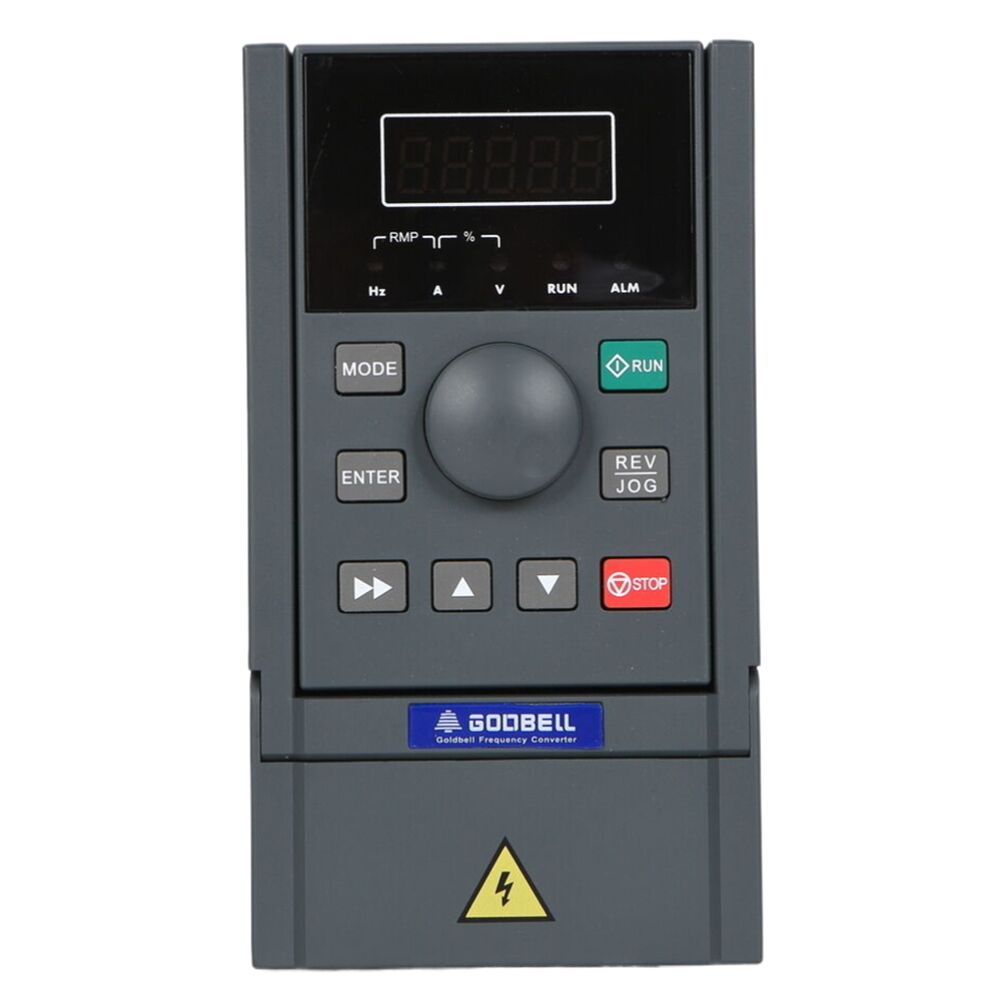
Why Environmental Contamination Is the Top Cause of VFD Failure
Environmental contamination—especially airborne dust and moisture—is the leading cause of Variable Frequency Drive (VFD) failure. These contaminants directly compromise thermal management and electrical integrity, triggering protective shutdowns, component degradation, and costly unplanned downtime. Left unaddressed, even minor accumulation accelerates wear, undermines cooling efficiency, and erodes insulation performance—often without early warning signs.
Dust-Induced Thermal Overload in VFD Heatsinks and Power Modules
Dust buildup on heatsinks and power modules obstructs airflow, increasing thermal resistance and trapping heat inside the enclosure. As internal temperatures rise beyond design limits, the VFD derates output or shuts down to prevent damage. Sustained overheating degrades power semiconductors, electrolytic capacitors, and control circuitry—reducing service life by up to 50% for every 10°C above rated operating temperature (per Arrhenius reliability models). Even in air-conditioned facilities, a clogged heatsink can negate active cooling entirely, resulting in over-temperature faults. This risk is acute in manufacturing, woodworking, mining, and food processing—environments where fine particulates are persistent. Routine cleaning using HEPA-filter vacuums or low-pressure, dry compressed air (with ESD-safe nozzles) restores airflow and prevents avoidable failures that halt production.
Moisture-Driven Corrosion, Tracking, and Insulation Breakdown in VFDs
Moisture poses a stealthy yet severe threat: humidity, condensation, or direct water ingress initiates corrosion on PCB traces, busbars, and connector pins. Over time, corrosion forms conductive paths across insulating surfaces—a process known as tracking—which leads to leakage current, arcing, and short circuits. When combined with dust or chemical vapors (common in rubber, plastics, and wastewater treatment), moisture dramatically accelerates insulation breakdown. Unlike dust-related thermal faults—which often trigger alarms—moisture damage may progress silently until catastrophic failure occurs. A single hour of unplanned downtime in continuous-process industries can cost $20,000–$50,000. Prevention hinges on using properly rated enclosures (e.g., NEMA 12 or 4X), maintaining ambient humidity between 20% and 80% non-condensing, and inspecting for condensation during thermal cycling. Regular drying and cleaning preserve dielectric strength and mitigate long-term corrosion risks.
Step-by-Step VFD Cleaning Protocol for Reliable Preventive Maintenance
Industry best practices—including those from the National Electrical Manufacturers Association (NEMA) and IEEE Std 1183—recommend annual preventive maintenance for low-voltage VFDs in standard environments, with more frequent intervals in harsh conditions. A disciplined, safety-first cleaning protocol preserves drive integrity and avoids preventable failures.
Safe Power-Down, Disassembly, and ESD-Safe Dust Removal (Vacuum vs. Compressed Air)
Begin by de-energizing the VFD and applying lockout/tagout (LOTO) per NFPA 70E standards. After verifying zero energy with a calibrated voltage tester, disconnect input/output wiring and remove panels using insulated tools. For dust removal, prioritize HEPA-filter vacuums: they capture 99.97% of particles ≥0.3 microns while eliminating electrostatic discharge (ESD) risk to sensitive electronics. Compressed air should be used only when vacuuming is impractical—and then strictly at ≤30 PSI, with dry, oil-free, ESD-safe nozzles held at least 6 inches from components to avoid particle embedding or static generation.
Cleaning Critical VFD Components: Heatsinks, Busbars, and Control Boards
After dust removal, inspect heatsink fins for blockages using thermal imaging; localized hotspots exceeding 15°C above baseline indicate restricted airflow. Clean fins with non-conductive plastic brushes and >90% isopropyl alcohol. For busbars, verify torque values per manufacturer specifications (typically 8–12 Nm) and remove carbon deposits using solvent-free, non-abrasive cleaners. On control boards, use antistatic brushes to dislodge debris, followed by visual inspection under ≥10x magnification for capacitor bulging, solder joint cracking, or trace-level corrosion—early indicators of moisture exposure or aging.
VFD Filter and Enclosure Maintenance to Sustain Clean Operating Conditions
Filters and enclosures serve as the primary physical barrier against environmental stressors. Their effectiveness depends entirely on consistent, evidence-based maintenance—not just initial selection.
Filter Inspection Schedule, Clogging Thresholds, and Replacement Best Practices for VFDs
Inspect air filters monthly in dusty or high-particulate environments (e.g., sawmills, metal fabrication) and quarterly in cleaner spaces (e.g., HVAC control rooms). Replace filters when airflow drops by more than 20% below rated capacity—a threshold validated by ASHRAE Guideline 41 and widely adopted in industrial predictive maintenance programs. Always use OEM-specified or certified equivalent filters to ensure proper fit, airflow balance, and pressure drop characteristics. Delaying replacement risks thermal overload, capacitor drying, and premature fan failure—costing far more than the filter itself. One documented case showed a single clogged filter contributing to a $137,000 production loss over two days.
Long-Term Environmental Control Strategies for VFD Reliability
Sustaining VFD reliability requires moving beyond reactive cleaning to proactive environmental stewardship. Facilities should integrate climate-controlled enclosures that regulate both temperature and humidity, deploy industrial-grade air filtration systems (e.g., MERV-13 or higher) to reduce particulate loading, and conduct thermographic inspections biannually to identify incipient thermal anomalies. Maintain ambient temperature below the VFD’s maximum rating—typically 40°C—and hold relative humidity between 20% and 80% non-condensing to inhibit corrosion and minimize thermal cycling stress. Match enclosure ratings precisely to the environment: NEMA 12 for dust-laden areas, NEMA 4X for washdown or corrosive settings, and NEMA 3R for outdoor exposure. These strategies collectively reduce failure rates by up to 65%, extend mean time between failures (MTBF) by 3–5 years, and significantly lower total cost of ownership across the VFD’s lifecycle.
FAQs
What are the primary causes of VFD failure?
Dust and moisture are the main culprits, as they disrupt thermal management and electrical integrity, leading to overheating, corrosion, and short circuits.
How often should VFDs be cleaned and maintained?
In standard environments, annual cleaning is recommended. In harsh or high-particulate areas, maintenance intervals should be more frequent.
What tools are best for cleaning VFD components?
HEPA-filter vacuums are ideal for dust removal, and non-conductive plastic brushes and >90% isopropyl alcohol can be used for cleaning heatsinks and other components.
What humidity and temperature levels should be maintained for VFD reliability?
Ambient relative humidity should be between 20% and 80% non-condensing, and temperatures should stay below the VFD's maximum rating, usually 40°C.
How does moisture damage VFDs?
Moisture causes corrosion, tracking, and insulation breakdown, which can lead to short circuits, leakage currents, or arcing.